Grades: grades-8-9
ACTIVITY 3: Tobacco & Nicotine Use - The Health Consequences
ACTIVITY 3: Tobacco & Nicotine Use - The Health Consequences
ACTIVITY 2: Tobacco & Nicotine Use–The Health Consequences
ACTIVITY 2: Tobacco & Nicotine Use–The Health Consequences
Tobacco causes bad breath and stains your teeth.17 Smoke can make your clothes and hair stink.17
Roll over the following text to learn about secondhand smoke.
What is secondhand smoke?
Secondhand smoke is made up of smoke that comes off the burning cigarette and the smoke that the smoker exhales.20 According to the Surgeon General, "there is no risk-free level of exposure to secondhand smoke: even small amounts of secondhand smoke can be harmful to people's health."20
Visit www.cdc.gov/tobacco for additional information about diseases and health consequences related to tobacco use.


ACTIVITY 3: Tobacco & Nicotine Use - The Health Consequences
ACTIVITY 3: Tobacco & Nicotine Use - The Health Consequences
WHAT ELSE IS THERE
What is secondhand smoke?
Secondhand smoke is made up of smoke that comes off the burning cigarette and the smoke that the smoker exhales.20 According to the Surgeon General, "No amount of secondhand smoke is safe…Scientists believe even a little tobacco smoke can be dangerous."20
Visit https://www.cdc.gov/tobacco/secondhand-smoke/about.html for additional information about diseases and health consequences related to tobacco use.
ACTIVITY 3: Tobacco & Nicotine Use - The Health Consequences
ACTIVITY 3: Tobacco & Nicotine Use - The Health Consequences
Young people who smoke cigarettes are likely to be less physically fit and have more respiratory (breathing) problems than people their age who don't smoke.19 Coughing, wheezing, shortness of breath, and phlegm production are symptoms that young people who use tobacco report they are more likely to experience than non-smoking peers.19
And then there's the issue of addiction, making it difficult to stop doing something.
TRUE OR FALSE?
The younger a person is when he or she starts smoking cigarettes, the more likely he or she is to become addicted to nicotine.19
Most young people who smoke regularly are addicted to nicotine, making it hard for them to quit.19
This statement is TRUE
ACTIVITY 3: Tobacco & Nicotine Use - The Health Consequences
ACTIVITY 3: Tobacco & Nicotine Use - The Health Consequences
WHAT ABOUT SMOKELESS TOBACCO?
Chew, dip, snuff, or spit tobacco—it's all smokeless tobacco. But, it's not a safe alternative to smoking cigarettes.16 There are health risks with using smokeless tobacco.
- It is a known cause of cancer—increasing a user's risk of oral cancer.16
- It can cause gum disease, tooth decay, and tooth loss.
- It can lead to nicotine addiction.16
ACTIVITY 3: Tobacco & Nicotine Use - The Health Consequences
ACTIVITY 3: Tobacco & Nicotine Use - The Health Consequences
MORE HEALTH PROBLEMS
Did you know nicotine use can harm the developing adolescent brain. The brain keeps developing until about age 25. 3
Using nicotine in adolescence can harm the parts of the brain that control attention, learning, mood, and impulse control. 3
Each time a new memory is created, or a new skill is learned, stronger connections – or synapses – are built between brain cells. Young people’s brains build synapses faster than adult brains, but nicotine changes the way these synapses are formed. 3
Using nicotine in adolescence may also increase risk for future addiction to other drugs. 3
ACTIVITY 3: Tobacco & Nicotine Use - The Health Consequences
ACTIVITY 3: Tobacco & Nicotine Use - The Health Consequences
MORE HEALTH PROBLEMS
Stroke
Cataracts
(which can cause blindness)
Gum Disease
Pneumonia
Bronchitis
Emphysema
Chronic Coughing
Wheezing
Heart Disease
Hardening of the Arteries
(which affects blood flow)
Roll over the boxes to see more health problems smoking causes.
ACTIVITY 3: Tobacco & Nicotine Use - The Health Consequences
ACTIVITY 3: Tobacco & Nicotine Use - The Health Consequences
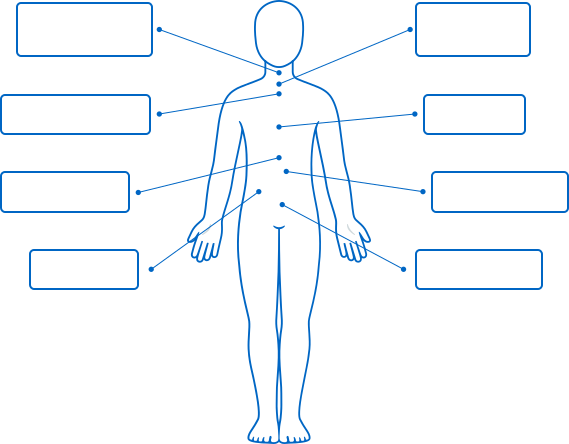
PHARYNX (Mouth & Throat)
ESOPHAGUS
STOMACH
KIDNEY
LARYNX (Voice Box)
LUNGS
PANCREAS
BLADDER
Roll over the boxes to see some of the types of cancer smoking causes.
ACTIVITY 9: Conflict – Learning to Deal with It
ACTIVITY 9: Conflict – Learning to Deal with It
CONFLICT - LEARNING TO DEAL WITH IT
Think about it
- The person sitting in front of you at the movie theater is too tall for you to see around but he doesn’t want to sit anywhere else.
- You want Italian food, and your sister wants Chinese food.
- You are invited to two parties at the same time on the same day.
- You and your best friend are competing for the same position on the soccer team.
ACTIVITY 8: Decisions, Decisions!
ACTIVITY 8: Decisions, Decisions!
DECISIONS, DECISIONS!
Face it—as you get older, you have more decisions to make. That can be a good thing, but it can also be tough at times. It’s important to think about what’s important to you and then look at your options and the possible consequences for each option before you make a decision.